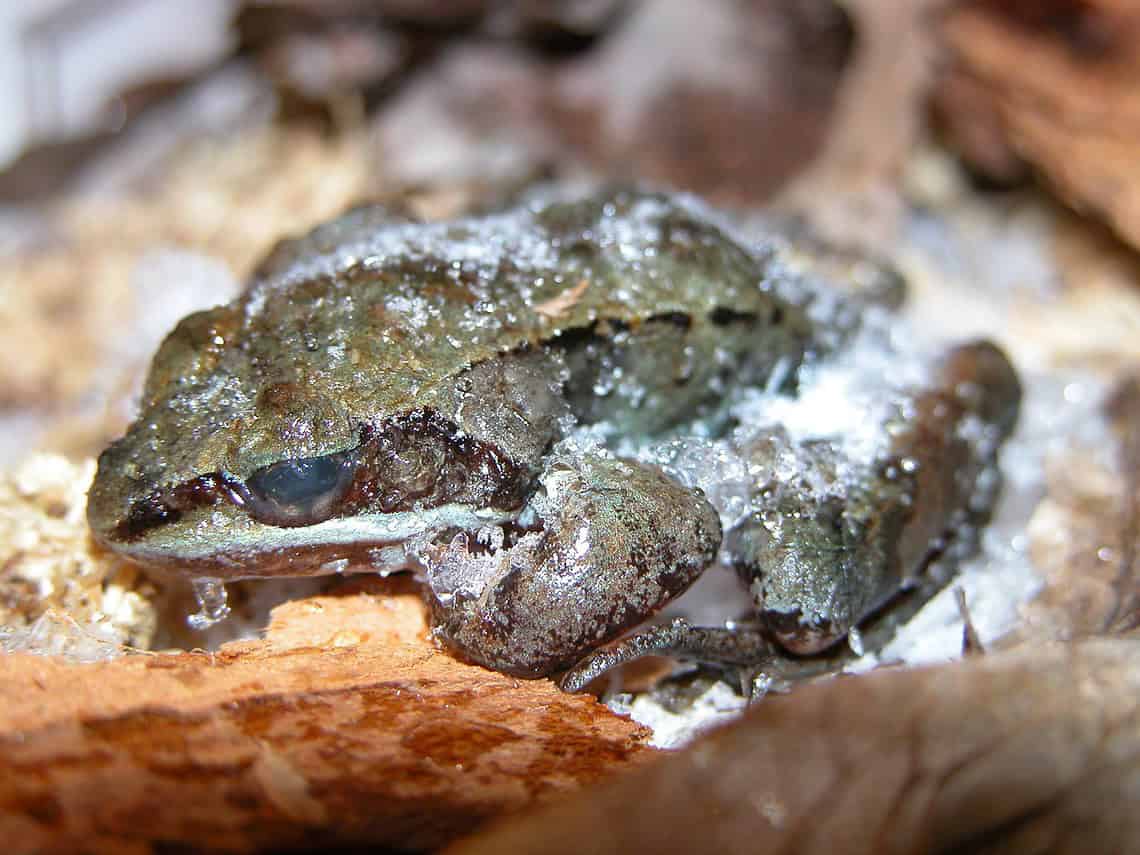

Frogs can freeze solid and then come back to life. The wood frog (Lithobates sylvaticus), native to North America—stretching from the southern Appalachians all the way north into the Arctic Circle in Alaska—is famous for surviving winter by literally freezing solid.
How It Survives Being Frozen
Rather than digging deep underwater or underground to escape frost like most amphibians, the wood frog hibernates just beneath leaf litter on the forest floor. When temperatures drop below freezing, it enters a state of suspended animation:
* Controlled Freezing: Up to 65–70% of the water in its body turns to ice, forming crystals in the spaces between its organs, under its skin, and inside its abdominal cavity.
* Vital Signs Stop: Its heart stops beating, it stops breathing, and brain activity ceases entirely. To the touch, it is rock-hard and cold like an ice cube.
* Natural Antifreeze: Before its cells can freeze (which would rupture and kill them), the frog’s liver converts stored glycogen into massive amounts of glucose (blood sugar), while its tissues accumulate urea. This syrupy mixture floods its cells, acting as a cryoprotectant that prevents water inside the cells from freezing even as the fluid outside them turns to ice.
* Spring Thaw: When temperatures rise in spring, the frog thaws from the inside out—its heart restarts first, followed by brain function and breathing—and within a few hours, it hops away completely unharmed.
Follow the frog 🐸 subscribe now!

