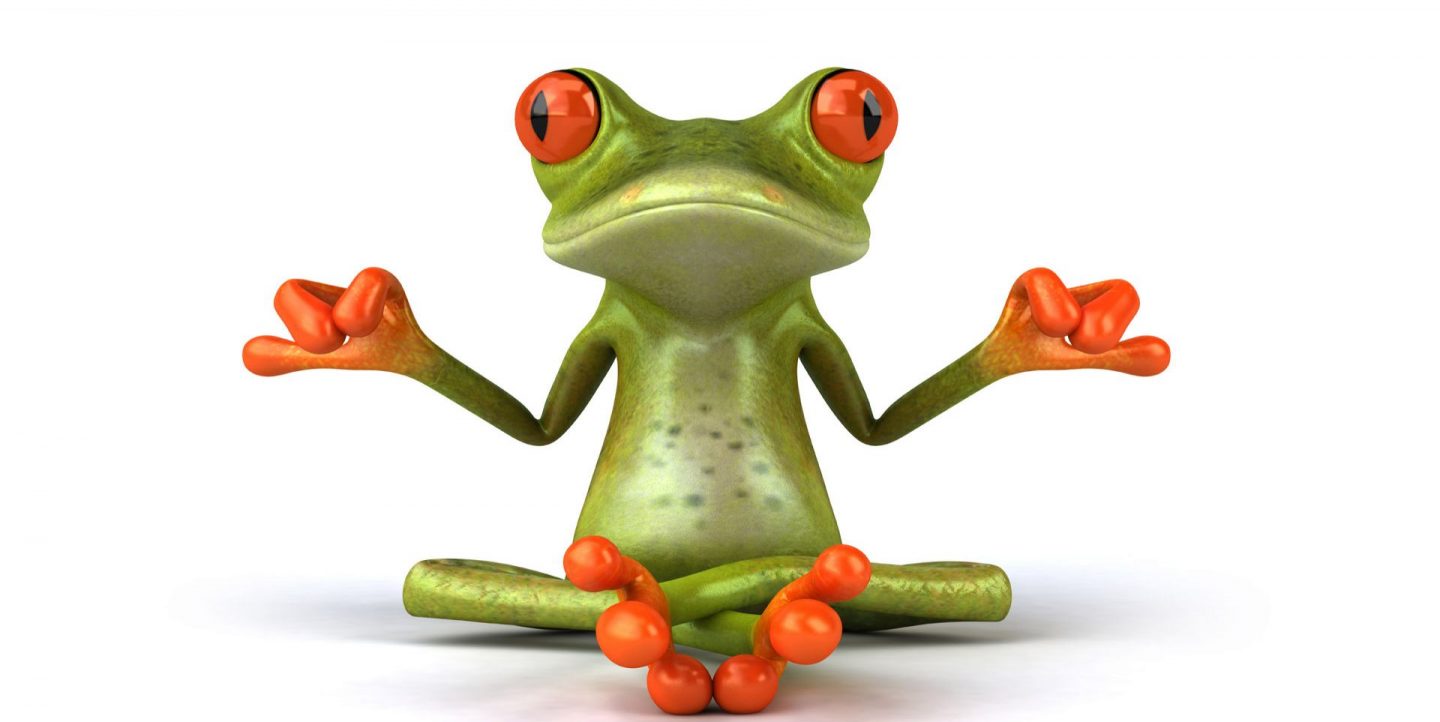
There comes a moment in every civilisation’s timeline when it must confront a crisis so profound, so ribbetingly catastrophic, that all previous troubles — plague, famine, potholes on the A595 — pale into insignificance. Today, dear reader, we face such a calamity: the sudden, explosive over‑abundance of frogs.
Not a polite number of frogs. Not a charming handful of amphibious acquaintances hopping gently through the garden. No. We are speaking of a biblical, apocalyptic, soul‑shattering tsunami of frogs. Frogs in the hedges. Frogs in the gutters. Frogs queueing at Greggs. Frogs forming small but surprisingly well‑organised unions. Frogs everywhere, in quantities that defy mathematics, physics, and basic social etiquette.
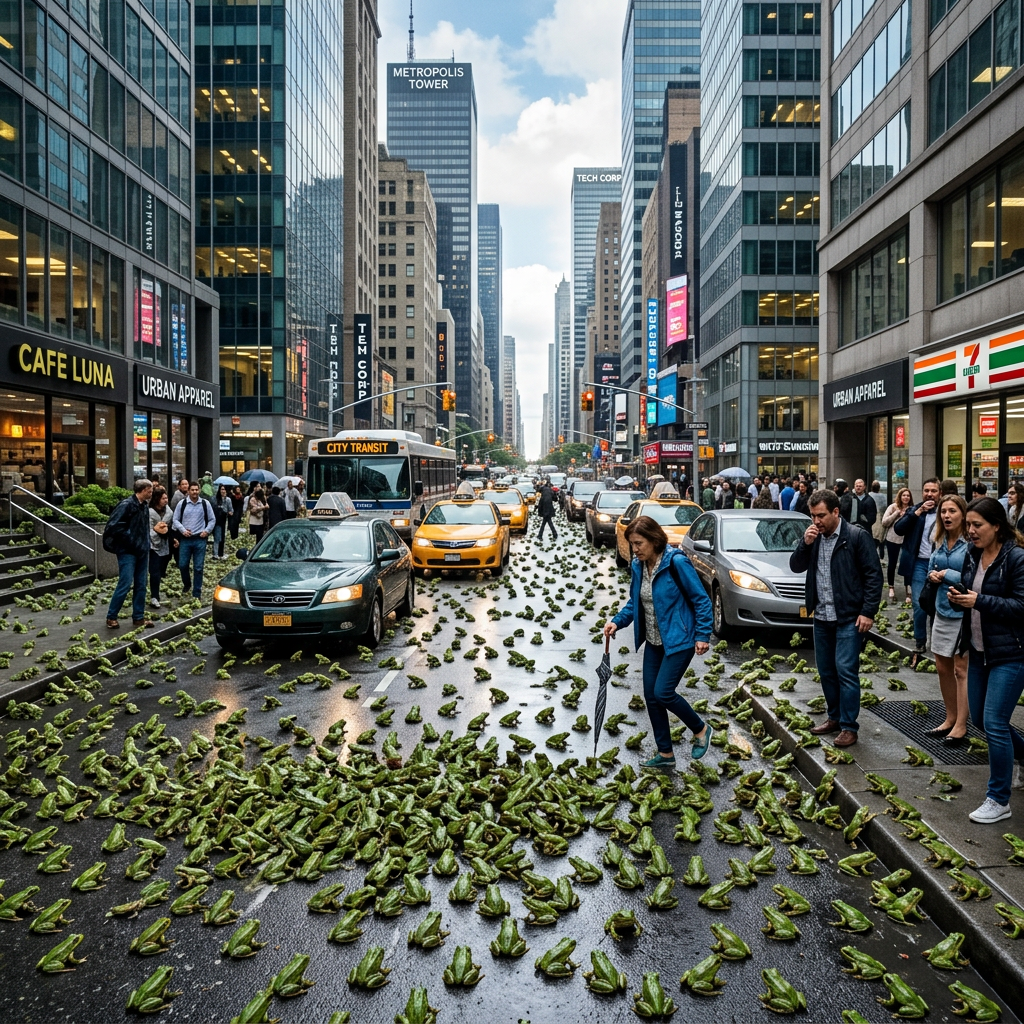
The first sign of trouble was subtle. A single frog, sitting on the doorstep, staring with the expression of someone who has seen too much. Then two. Then twelve. Then a dense, pulsating carpet of green bodies stretching from the bins to the horizon like some kind of amphibian motorway. Before long, the local council declared a “situation,” which is the official governmental term for “we have absolutely no idea what to do and are hoping it goes away.”
But frogs do not “go away.” Frogs arrive. Frogs multiply. Frogs take over.
The problems began immediately. For one, the sheer noise. A single frog croak is charming. A million frog croaks is a sonic weapon capable of liquefying the human nervous system. People reported hearing phantom croaks even in their sleep, as though the frogs had infiltrated their dreams and were conducting psychological warfare.
Then came the logistical issues. Pavements became slippery, treacherous obstacle courses. Buses struggled to navigate roads clogged with amphibian traffic. The local postman, once a cheerful man, now moves with the haunted shuffle of someone who has delivered letters through a living swamp. Parcels arrive damp. Everything arrives damp.
And the environmental consequences — oh, the consequences. Entire ecosystems thrown into chaos. Garden ponds transformed into overcrowded frog hostels. Dragonflies petitioning for emergency airspace. Slugs forming resistance groups. Even the local cats, normally fearless predators, have taken to sitting indoors with wide eyes, reconsidering their life choices.
But perhaps the gravest concern is the social impact. Communities divided. Friendships strained. Some residents embrace the frogs, welcoming them as “quirky neighbours” and insisting they bring “character” to the area. Others view them as harbingers of doom, a sign that nature has finally lost patience with humanity and is sending in the amphibious infantry.
The frogs themselves, of course, remain inscrutable. Their motives unclear. Their organisation suspiciously efficient. Reports have emerged of frogs forming neat lines, as though preparing for something. Something big. Something… strategic.
And so we must ask ourselves: what happens when the frog population continues to rise? What happens when the frogs begin demanding representation? What happens when they discover the concept of voting?
In conclusion, the sudden surge of frogs presents a crisis of unprecedented scale. It threatens our infrastructure, our sanity, and our ability to walk anywhere without slipping. It challenges our understanding of nature and forces us to confront the terrifying possibility that frogs, in large enough numbers, may simply decide they’ve had enough of us.
We must act. We must prepare. We must, above all, respect the frog — for it is numerous, it is determined, and it is coming.


