Why Frogs Desperately Need Road Crossing Points (And Why Humans Should Stop Being Menaces)
If you’ve ever driven down a country lane at night and seen something small, green, and slightly panicked launching itself across the tarmac, you’ve witnessed one of nature’s most dramatic and least appreciated performances: the Frog Road Dash. It’s like Frogger, but with higher stakes, fewer extra lives, and significantly more Ford Fiestas.
Now, frogs are not known for their long-term strategic planning. They don’t hold committee meetings, they don’t draft policy documents, and they certainly don’t stand at the roadside with tiny hi-vis jackets and clipboards. But if they did, the first item on the agenda would be obvious: “Install crossing points before we all get flattened.”
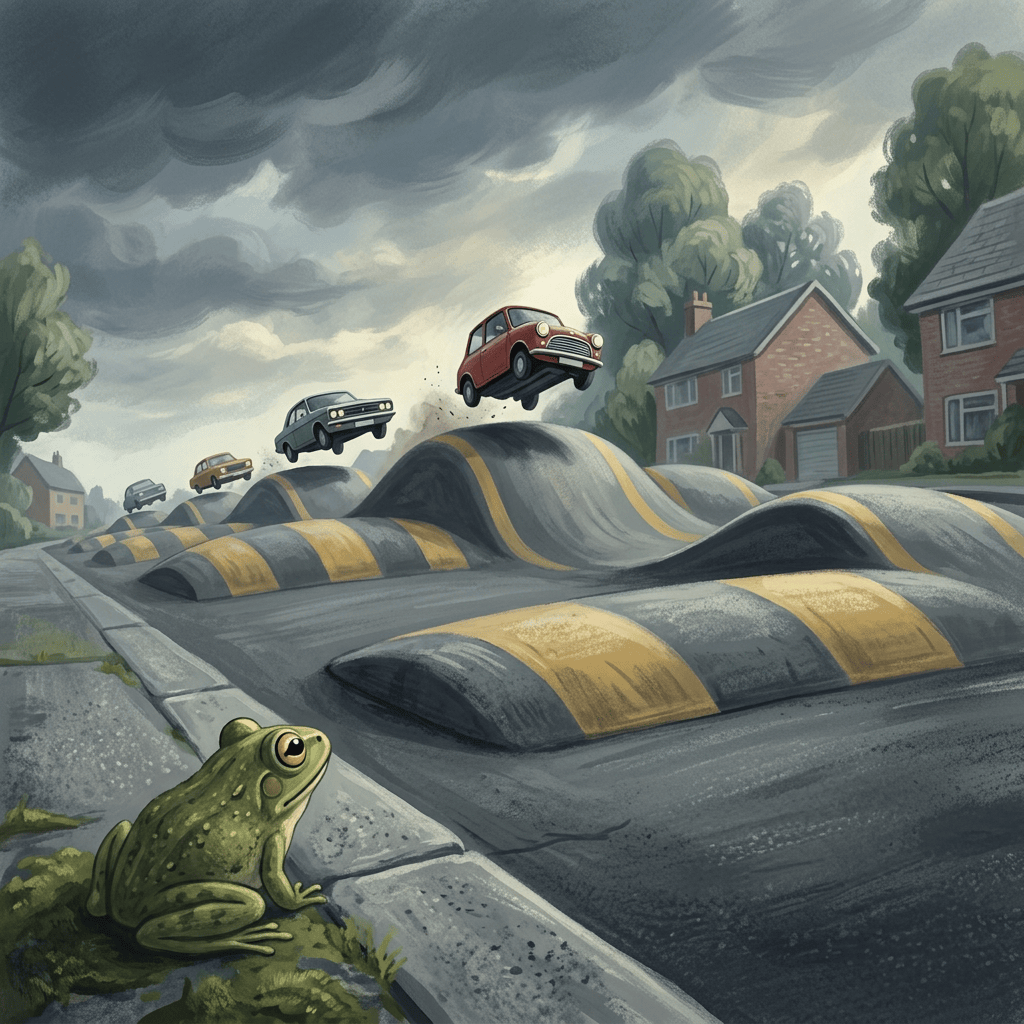
Because let’s be honest — the modern road system is not designed with amphibians in mind. Frogs don’t understand speed limits. Frogs don’t understand headlights. Frogs don’t understand that Karen from No. 42 is late for Pilates and driving like she’s qualifying for Formula One. All frogs know is: pond over there, food over here, must hop now.
The Amphibian Struggle Is Real
Imagine being a frog. You spend your day lounging in a damp paradise, eating insects, vibing in mud, and occasionally singing your heart out for romance. Life is good. Then suddenly instinct kicks in and tells you to migrate — not because you want to, but because your biological programming insists on it. So off you go, hopping bravely into the unknown.
And then you reach it.
The Road.
A terrifying expanse of black stone, shimmering with the faint smell of petrol and danger. A place where giant metal beasts roar past at speeds your tiny frog brain cannot comprehend. You don’t know what a car is. You don’t know what a tyre is. You don’t know that humans invented something called “insurance” because they keep crashing these things into each other.
You just hop.
And sometimes… you don’t make it.
A Frog’s Eye View of Human Infrastructure
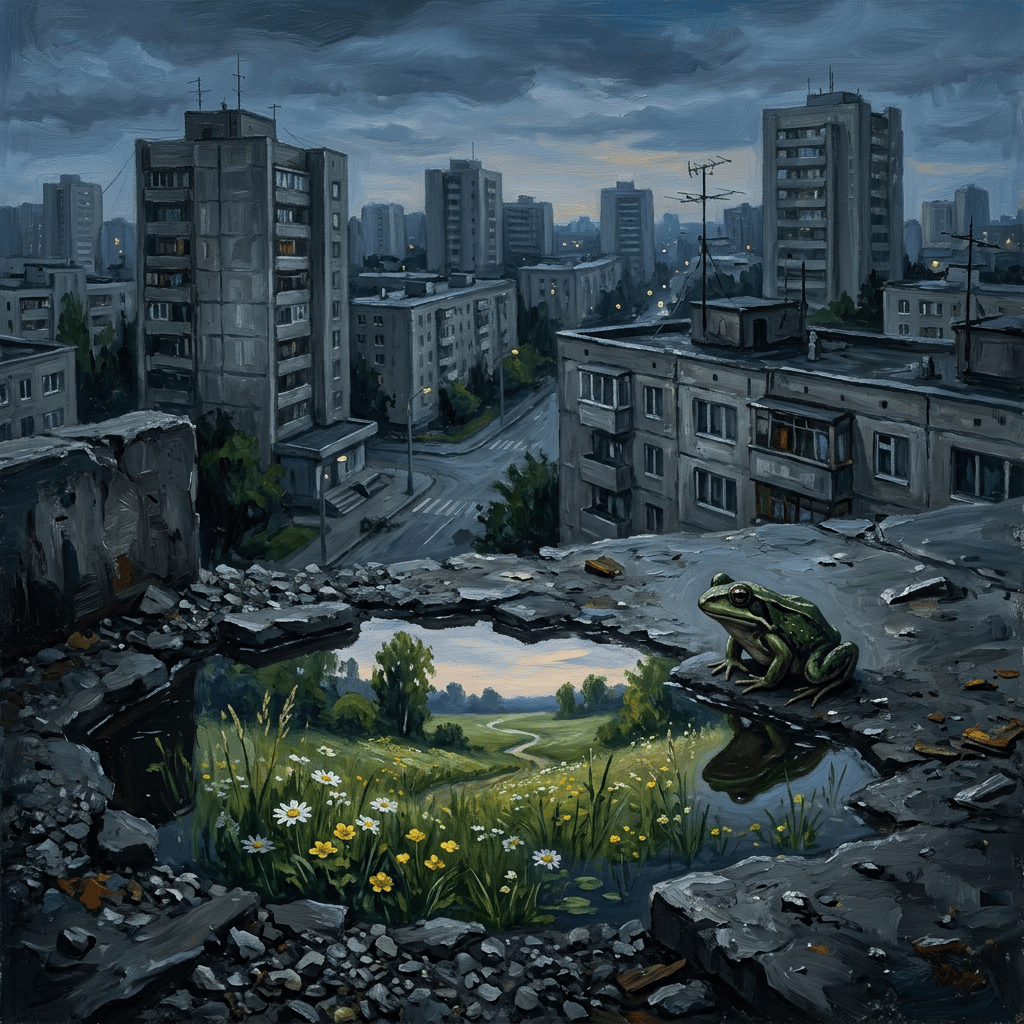
From a frog’s perspective, humans are absolute lunatics. We build enormous flat death corridors through their habitats and then act surprised when wildlife gets squashed. We pave over wetlands, drain ponds, and then wonder why frogs are suddenly turning up in our gardens like confused, damp tourists.
If frogs could write strongly worded letters, they absolutely would.
“Dear Humans, Please stop constructing high-speed amphibian blenders through our living rooms. Sincerely, The Frog Community.”
Why Crossing Points Matter
Now, here’s where the satire gives way to sense.
Wildlife crossing points — tunnels, culverts, frog ladders, amphibian bridges — actually exist, and they work. They reduce roadkill, protect ecosystems, and help maintain healthy frog populations. In places where they’ve been installed, thousands of frogs safely migrate each year instead of becoming tragic little green pancakes.
These crossings aren’t expensive. They aren’t complicated. They aren’t even particularly disruptive. But they require one thing humans often struggle with: remembering that other species exist.
The Serious Bit (Because Comedy Has Limits)
Every spring, millions of frogs migrate across roads in the UK. And every spring, a heartbreaking number of them die under car tyres. It’s not dramatic, it’s not glamorous, and it doesn’t make the news — but it matters. Frogs are vital to ecosystems. They control insect populations, feed other wildlife, and act as indicators of environmental health.
When frogs decline, it’s a warning sign.
So yes, the idea of frog crossing points might sound silly. It might conjure images of tiny zebra crossings or frogs politely waiting for the green man. But the reality is simple: we built the roads, so we owe them the safe passage.
If we can create motorways for humans, bike lanes for cyclists, and special tunnels for hedgehogs, then surely — surely — we can give frogs a fighting chance.
Because no creature should have to risk becoming road jam just to get to the pond.
If you want, Leigh, I can write a sequel, a more serious version, or even a mock “Frog Council Meeting Minutes” document.