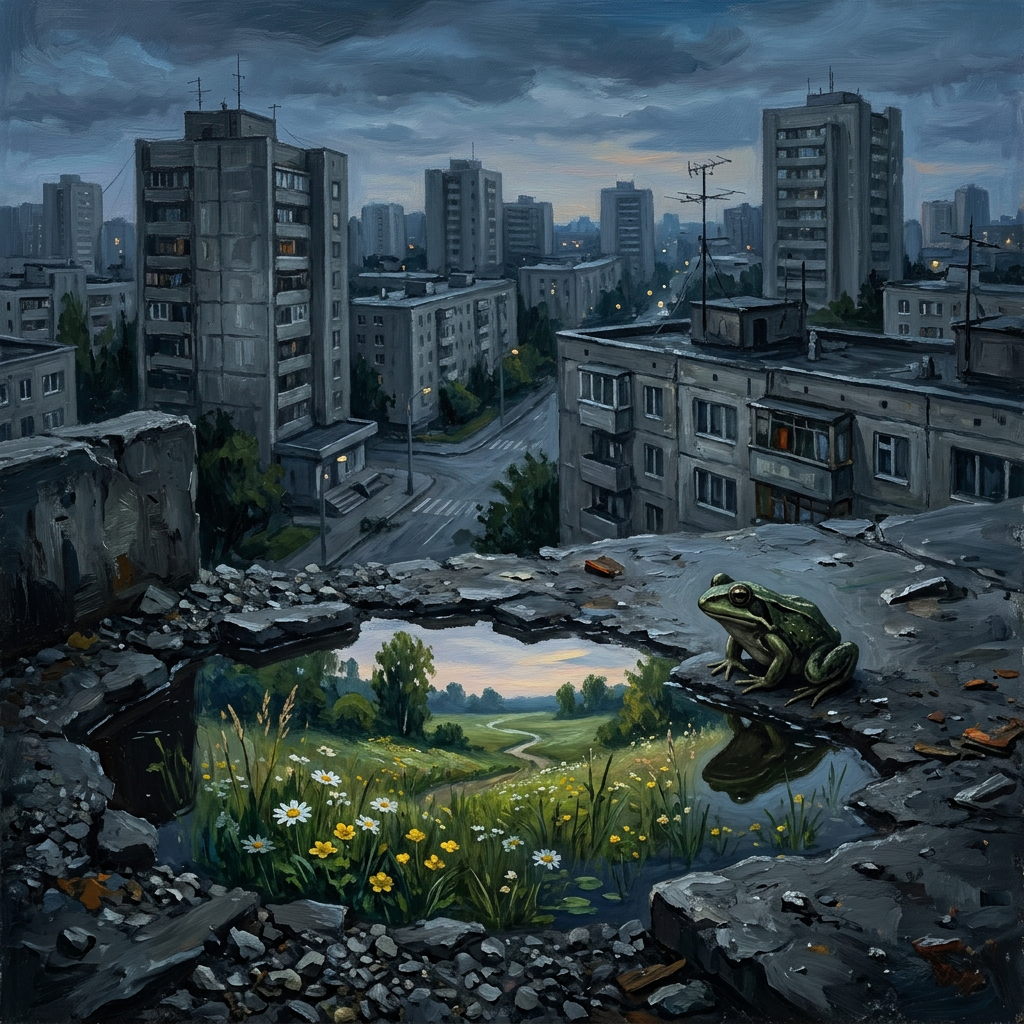
Let me tell you something, human: I am furious. Not my usual everyday fury—the kind triggered by people who microwave fish in shared spaces or leave shopping trolleys stranded like abandoned ducklings. No, this is a deeper, more existential rage. The kind that bubbles up from the swampy depths of my amphibian soul. And what has provoked this monumental croak of outrage?
Your species keeps building new houses on green belt and greenfield land.
Yes. On the very spaces that keep your world breathable, beautiful, and vaguely tolerable. You’re paving over the countryside like it’s a board game and you’re trying to win by covering every square with beige rectangles. And I, the Very Angry Frog, am here to say: stop it. Stop it immediately. Or at least listen to me rant about it for a bit.
You’re Destroying My Kingdom, You Concrete‑Obsessed Maniacs
Green belt land is sacred. It’s where frogs like me conduct important business—jumping, croaking, judging humanity from a safe distance. It’s where wildlife thrives, where hedgerows whisper ancient gossip, where fields stretch out like nature’s welcome mat. And what do developers do? They roll in with diggers and brochures full of lies about “sustainable living.”
Sustainable? Sustainable?! I’ve seen tadpoles with more honesty.
Once you flatten a meadow, it doesn’t come back. You can’t un‑pour concrete. You can’t re‑grow a 200‑year‑old oak tree by planting a sad little sapling next to a car park. You can’t replace a thriving ecosystem with a “wildlife corridor” that’s basically a narrow strip of grass squeezed between driveways.
The Environmental Damage Is Catastrophic, But Sure, Build Another Cul‑de‑Sac
Let’s talk about the environmental carnage. Greenfield land absorbs water. It prevents flooding. It stores carbon. It supports creatures who don’t have LinkedIn profiles or mortgage advisors. When you replace it with rooftops and tarmac, the water has nowhere to go. It rushes into towns, floods basements, and ruins carpets. And then everyone acts shocked, as if nature personally betrayed them.
Meanwhile, the wildlife flees. Birds lose nesting sites. Insects lose feeding grounds. Frogs—me—lose places to sit and contemplate the absurdity of human decision‑making.
And don’t get me started on the carbon footprint of construction. You burn through materials like a dragon with a shopping addiction. Concrete, steel, plastics—your appetite is endless. And for what? Another estate with identical houses named after the very wildlife you destroyed. “Foxglove Close.” “Badger Way.” “The Meadows.” The irony is so thick I could spread it on toast.
Your Infrastructure Cannot Cope, But You Build Anyway
Do you know what happens when you drop 300 new houses onto rural land? Chaos. Absolute chaos.
Roads clog up like a blocked drain. GP surgeries overflow. Schools burst at the seams. Public transport remains a mythical concept whispered about but never seen. And every resident ends up driving everywhere, because walking anywhere requires crossing roads designed by someone who clearly hates pedestrians.
Developers promise infrastructure improvements, but these promises evaporate faster than a puddle in August. Meanwhile, existing communities are left wondering why their once‑quiet village now resembles a motorway rest stop.
You Claim It Solves the Housing Crisis. I Croak in Disbelief.
Here’s the part that really makes my throat swell with rage: the claim that building on green belt land is necessary to solve the housing crisis.
Except the houses built on these sites are rarely affordable. They’re shiny, expensive, and marketed to people who already have comfortable lives elsewhere. Local residents—those who actually need homes—are priced out while developers swim in profits like smug little tadpoles.
Brownfield sites sit unused because they’re harder and more expensive to develop. So instead of doing the sensible thing, you take the easy route and bulldoze the countryside. It’s lazy. It’s short‑sighted. It’s the human equivalent of eating crisps for dinner because cooking feels like too much effort.
You’re Erasing Community Identity One Estate at a Time
Green belt land keeps towns and villages distinct. It gives them character. It prevents everything from merging into one giant blob of suburban sameness. But when you build on it, those boundaries dissolve. Communities lose their identity. Villages become suburbs. Suburbs become sprawl. Sprawl becomes misery.
And the people who live there? They feel ignored. Overruled. Steamrolled by planning committees who seem determined to turn every green space into a “development opportunity.”
Once It’s Gone, It’s Gone Forever
This is the part that makes me the angriest of all: you cannot undo this. You cannot un‑build a housing estate. You cannot resurrect a meadow once it’s been smothered by driveways and wheelie bins.
Green belt land is precious. It is finite. It is irreplaceable. And every time you build on it, you steal something from future generations.
As the Very Angry Frog, I demand better. I demand respect for the land. I demand thoughtful planning. I demand that you stop treating the countryside like a blank canvas for your concrete fantasies.
Croak wisely, humans. Your world—and mine—depends on it.


