
Pip: The Very Angry Frog — a site where one furious amphibian watches the world with professional indignation and occasionally reports on its own biology. Priorities, really.
Mara: Today we're covering two quite different territories: the slow, grudging thaw in Britain's relationship with Europe, and the genuinely astonishing science of how frogs survive being frozen solid.
Pip: Let's start with the geopolitics — specifically, what happens when a country stops treating its neighbours like pantomime villains.
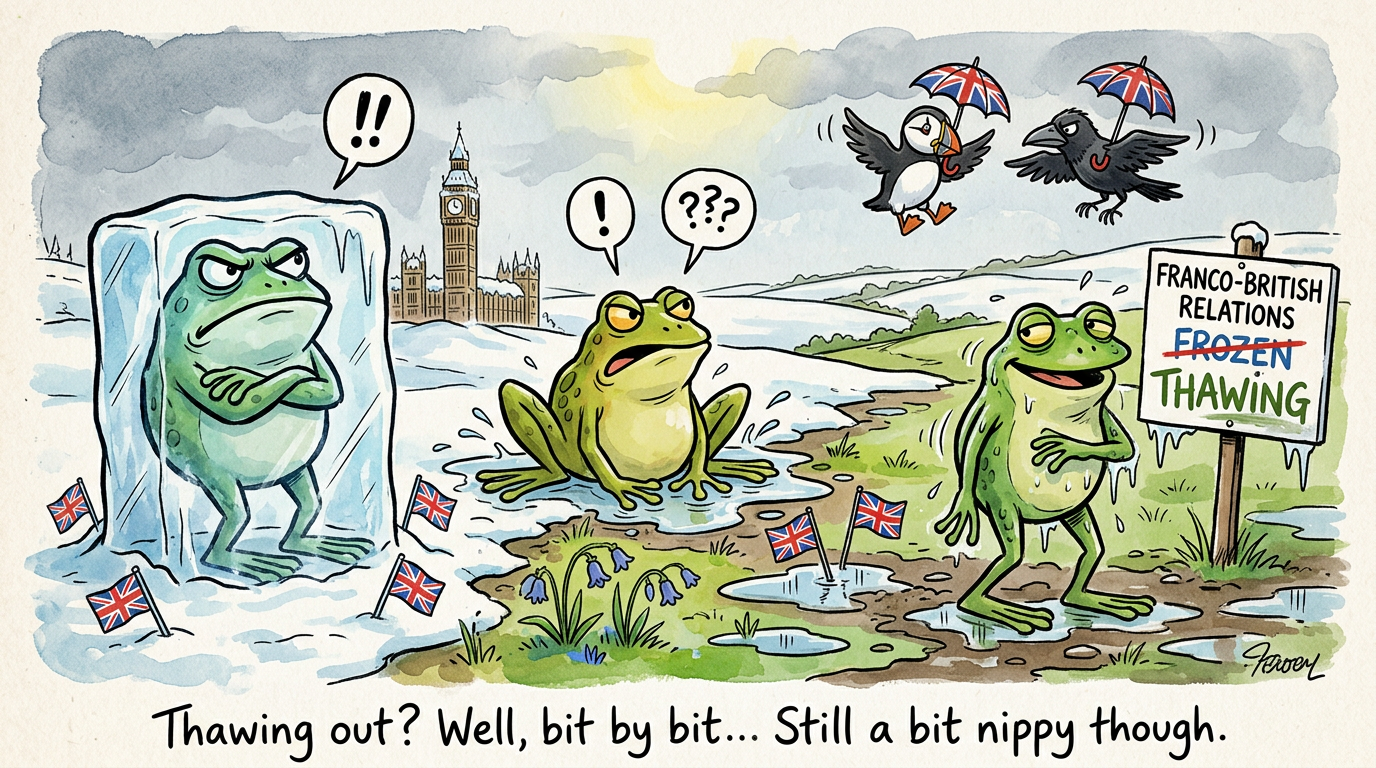
Britain rediscovers its neighbours
Mara: The question here is whether the post-Brexit mood is actually shifting — whether the years of political theatre are giving way to something more practical, and what that looks like from the outside.
Pip: WP Admin sets the tone immediately, writing about "politicians charging around the garden pond like headless dragonflies, shouting about sovereignty while tripping over wheelbarrows."
Mara: And the upshot is this: the piece argues that closer cooperation with Europe was never surrender — it was always common sense. Britain shares, as the post puts it, "geography, history, markets, culture and a great many weather systems that seem personally determined to ruin bank holidays."
Pip: The conclusion isn't triumphant. It's a weary nod — "About time." Which, honestly, is the correct emotional register for any good news arriving several years late.
Mara: From frogs in politics, then, to frogs in the actual cold — the biology is, if anything, more dramatic.
What it takes to freeze and survive
Pip: The question Froggy's post raises is a genuinely strange one — can a vertebrate animal stop its heart, stop breathing, turn two-thirds of its body water to ice, and then simply walk away in spring?
Mara: The wood frog, Lithobates sylvaticus, does exactly that. The post describes how "up to 65–70% of the water in its body turns to ice, forming crystals in the spaces between its organs, under its skin, and inside its abdominal cavity."
Pip: So the reason this matters is that the frog is, by any ordinary measure, dead during winter — no heartbeat, no breathing, no brain activity. Rock-hard to the touch.
Mara: What prevents actual cell death is the cryoprotection mechanism. The liver converts stored glycogen into massive amounts of glucose, while tissues accumulate urea. That syrupy mixture floods the cells and keeps the water inside them liquid even as everything outside freezes.
Pip: The thaw is equally precise — heart restarts first, then brain function, then breathing. Within hours, it hops off entirely unharmed.
Mara: The wood frog's range runs from the southern Appalachians all the way into the Arctic Circle in Alaska, which makes more sense once you understand it is essentially carrying its own antifreeze.
Pip: Natural antifreeze, suspended animation, full recovery. Politicians could learn something about patience from this frog.
Mara: Two very different kinds of resilience, really — one political, one biological, both about surviving conditions that should, by rights, be fatal.
Pip: The angry frog remains vigilant. We'll be back when it has more to report.


